


What to expect on safari during rainy season in Uganda
May 10, 2025
What to expect on safari during rainy season in Uganda
What to expect during Uganda safari in the rainy season is mainly muddy conditions in most destinations. Uganda is a destination of all seasons and not affected by extreme weather. The average rainfall annual rainfall of Uganda is 700 mm to 1500 mm and average temperatures at 24 degrees centigrade to 33 degrees centigrade. Uganda is straddling the equator and this may explain the varied temperatures received throughout the country.
Most Popular Safaris
8 day Uganda safari via Kigali
5 days gorillas and chimp safari
16 day primate game and culture
11 days gorilla tracking safari
5 days gorilla and Nile river source
17 day Uganda birding and wildlife
In general Uganda, receives two main seasons that is the rainy season and the dry season with exception of Karamoja sub region which has semi-arid climate with one rainy season in the year that is April to September.
What to expect Uganda’s safari destinations in the wet season
Uganda National parks
Bwindi lmpenetrable National Park
ls the primates haven in Uganda especially the mighty mountain gorillas. More than 9 other primate species are recorded as residents of Bwindi Forest including chimpanzees, L’hoest, blue monkeys, grey cheeked mangabey, vervet monkeys, black and white colobus and others. Gorilla safaris are the main safari activities in Bwindi , birding, nature walks and others.
Even though it rains in Bwindi forest anytime without warning, the recognized rainy season is mainly March to May and October to November with average annual rainfall of 2390 mm. The rain in this period may drizzle almost for an entire year day.
During the gorilla safari, rain may fall in the forest without warning so you need to carry some rainproof gears to protect yourself from getting wet. There is normally less sunray penetration through the dense of canopy of Bwindi to the ground so most of the time the ground is logged during the wet season.
Even the rivers in the forest tend to flood the ground in the wet season creating a soggy and boggy environment as it gets slippery when matter decomposes. It is best to wear safari boots beyond the ankles to protect your feet from the muddy ground as you traverse the forest. In case you have to hike to the slopes or deep in the sun-starved valleys to find the mountain gorillas, you need to safety boots on.
Mgahinga National Park
The nature of the terrain of Mgahinga National Park is mainly jugged with several highlands but the most outstanding are the three Virunga volcanoes that is Mountain Gahinga, Muhavura and Sabyinyo. Gorilla trekking is the main activity in the park with one gorilla family so far opened to the public that is called Nyakagezi.
The rainy season of Mgahinga National Park is usually March to May and October to November but it main rain anytime without warning even in the dry season. Mgahinga National Park may receive 250 mm of rain per day in the wet season with chances of rain falling almost an entire day.
The gorilla trekking experience in Mgahinga National Park is quite steep because the gorillas tend to spend more time in the elevated points of the park in the wet season which are draped by creepers. Expect to hike in case the mountain gorillas choose to be on the slopes of the highlands in the park.
During Golden monkey safaris in Mgahinga National Park, expect to stay on your toes most of the time because naturally these primates are restless even though they are habituated. The golden monkeys never forget there restless behaviors.
If you choose to do a hike on either of the three Volcanoes in Mgahinga National Park, sometimes the ground is slippery so you need to wear the right safari boots and bear some level of fitness.
Queen Elizabeth National Park
Queen Elizabeth National Park sits on the floor of the rift valley with the wet season expected from March to May and September to November. The average annual rain received in the park is 1250mm. The mean minimal temperatures of Queen National Park is 18 degrees centigrade and mean maximum temperature of 28 degrees centigrade.
During the wet season in Queen Elizabeth National Park, expect the tracks to be muddy because the park has volcanic soils. Some areas in the park especially those close to water sources in Queen Elizabeth National Park tend to flood. The Ishasha River Bridge in the southern part of the Queen Elizabeth National Park may be washed away sometimes especially when the rain falls severely so using it to enter or exit the park depends on its condition, there are alternatives routes too.
In the wet season, the grass in Queen Elizabeth National Park tends to get high and so may obstruct visibility of the wild animals in the park.
Chances of witnessing new births or borns in the wilderness may be more open in the wet season of Queen Elizabeth National Park and these act as hiding places to a number of Wild animals.
Some of the animals of Queen Elizabeth National Park include lions, leopards, hyenas, waterbucks, bushbucks, elephants, buffaloes and others.
Expect an increase in the water level of Kazinga Channel where hippos and crocodiles are common residents. The number of animals that normally visit the shoreline of Kazinga channel in the wet season tends to reduce because there is plenty of water sources within the park and food is in abundance for the herbivores. Expect a plethora of birds with a possibility of foreign migrants to flock the banks of Kazinga Channel.
Kibale National Park
Kibale National Park is the prime primates destination in Uganda hosting a number of chimpanzees. The population of chimpanzees in Kibale National Park is about 1500 from the about 5000 chimpanzee that Uganda generally has.
Chimpanzee trekking and chimpanzee habituation experience (CHEX) are the main activities in this park. Other activities in Kibale National Park include birding, forest walks, research and others.
Most of the activities in Kibale National Park include walking in the forest but the wet season doesn’t affect these activities as long as you wear the right chimpanzee trekking gears.
The wet season in Kibale National Park is normally March to May and September to November with the northern part of the park being the wettest. Kibale National Park has pleasant climate and its average annual rainfall is estimated to be up to 1700 mm. The annual temperatures range of Kibale National Park is 14 degrees centigrade to 27 degrees centigrade with the southern part of the park having higher temperatures where the park drops into the hot rift valley floor giving away forest and turning into open grassland.
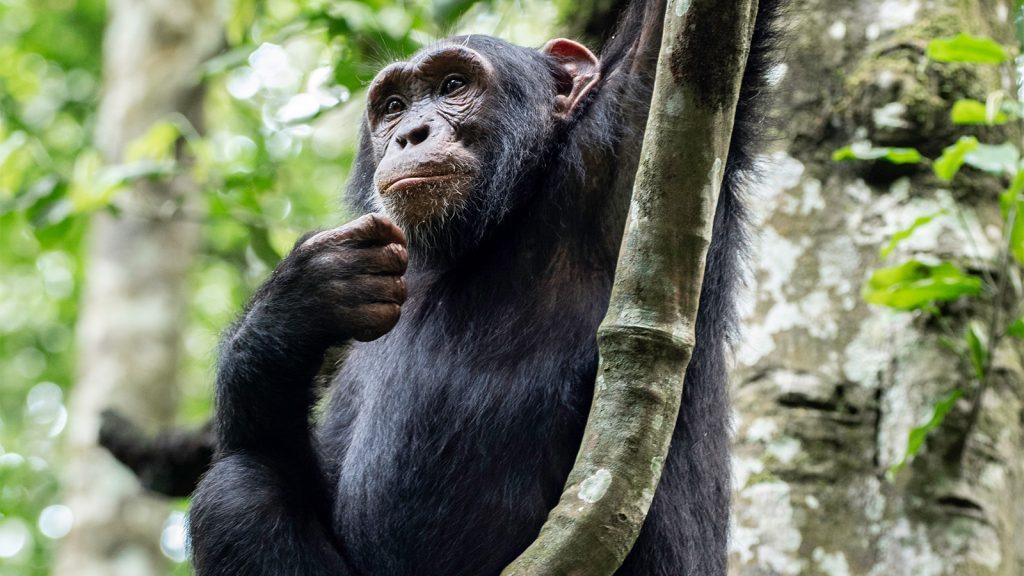
Expect to move in a cold Kibale forest during the wet season with more undergrowth protruding over to cover the trails within the forest. Kibale forest is the water catchment area for the surrounding areas wit a dense network of rivers. Expect the ground to be flooded sometimes especially during the severe rainy season.
The chimpanzees and other primates in Kibale forest tend to spend most of the time up in the trees during the wet season because the ground is wet. It is best to carry a pair of binoculars to use during chimpanzee trekking in order to get a better view of these primates.
The forest canopy of Kibale is dense in the wet season allowing less sunlight to penetrate through to the ground therefore keeping the environment with high precipitation most of the time.
Kidepo Valley National Park
Kidepo Valley National Park has semi arid climate with one rainy season expected in the year that is normally April to September with light rains. The Narus river valley of Kidepo Valley National Park in the southern part of the park receives 890 mm annually and 635 mm annual rain in the northern part of the park.
The Rivers in Kidepo Valley National Park are seasonal and may be present in the wet season but when the severe dry season hits the park, they may dry out. Kidepo Valley National Park has swamps and pools that regulates the water in the park and may reserve for some time even during a part of the dry season.
The tracks in Kidepo Valley National Park tend to get messy in the dry season because the nature of the soil in this area is porous. The roads to Kidepo Valley National Park also tend to get messy and so having a 4x4 wheel drive vehicle is recommended
During the game drive in Kidepo Valley National Park, you may encounter animals such as cheetahs, lions, leopards, striped hyenas, black backed jackals, klipspringer, elephants, cape buffaloes, Defassa waterbucks, reedbucks, Burchell Zabras, herds of elephants and others. More than 463 bird species have been identified as residents of Kidepo Valley National Park including ostriches.
Murchison Falls National Park
Positioned straddle on river Nile is the Murchison National Park the largest Uganda National Park. the know rainy season of Murchison Falls National Park are April to November . The mean maximum temperatures of Murchison Falls National Park is 29 degrees centigrade.
Murchison Falls are the highlight of spots to visit in this park from which the park gets its name but the water volume that squeezes through the narrow gorge tends to increase in the wet season and so producing the loudest sound. Hiking to the top of the falls may be quite challenging in the wet season and sometimes may be a no go area for the fait hearted especially during the wet season.
There are generally less animals seen on the banks of River Nile during the launch trip because many of these tend to use other water sources situated elsewhere in Murchison Fall National Park other than the river water. The riverbanks tend to extend covering the usual shoreline and sometimes when the rain season intensifies may flood the compound of accommodations close to River Nile.
Some of the animals you may get chance to see in Murchison Falls National Park include Buffaloes, Rothschild giraffes, herds of elephants, reedbucks, oribi, statungas, lions, leopards, hartebeest, Uganda kobs, warthogs, hyenas and others.
The chimpanzees in Kaniyo Pabidi forest tend to spend more time up in the trees during the wet season so you need to have a pair of binoculars to see them sometimes. The trails in the forest tend to remain wet most of the time in the wet season so pack the appropriate footwear and a rain coat in case its starts raining while in the forest.
For more information, please contact our team.



EARLY BIRD SAFARI DISCOUNTS FOR 2026-27
Take a budget gorilla trip into Uganda’s Bwindi Impenetrable Forest to trek mountain gorillas and stay in low-cost camps and gorilla lodges.
Responsible Travel Uganda
We care about the communities and environment we take our travellers to. Sustainable travel will keep us in business, so we have a responsible travel policy. Take a look!.
Latest Blog Stories
Related Travel News
Follow our community blog and keep up-to-date with travel news that will help you plan your safari trip
Safari Inquiries
Our Safari consultants are ready to answer all your questions. Kindly fill out the form below, and we will respond to you as soon as possible
CUSTOMER REVIEWS
Read the real stories and experiences shared by fellow travellers who've travelled with Encounter Africa Safaris.


These reviews provide authentic, firsthand insights, offering a true glimpse into what you can expect from the experience
Safari Inquiries
Our Safari consultants are ready to answer all your questions. Kindly fill out the form below, and we will respond to you as soon as possible