


Best places to see primates in Tanzania
December 1, 2024
Best places to see primates in Tanzania
Primates in Tanzania can be seen in the different National parks in the country with different primate species, which include chimpanzees, vervet monkeys, red-tailed monkeys, blue monkeys, baboons and red colobus monkeys, among others. Chimpanzee trekking in Tanzania is a popular activity and is carried out in two main safari destinations, including Gombe Stream National Park and Mahale National Park. In this article, we are going to look at the best places to see primates in Tanzania.
Most Popular Safaris
3 Day Serengeti National Park Safari
Mahale National Park
Located among the hills of the Mahale Mountains is Mahale National Park where chimpanzee trekking takes place, one of the endangered species in the country. Chimpanzee trekking is one of the best and most awesome journeys that tourists take on a primate visit to Mahale National Park through the forests led by an experienced guide to take you through the unknown trails. Trekking takes you through the thick shrouded forests and sometimes it takes the guide to hack through the undergrowth to take you to the right location of the chimpanzees.
Mahale National Park is home to over 1000 chimpanzees, but a few of these are habituated and open to tracking, and these are in the Mimikire Clan, which is also known as the M-group. Trekking chimpanzees can take minutes and sometimes hours depending on the location of the M-group, but after locating them, all tourists get to spend an hour strictly with the primates studying their behaviours, bickering, grooming their young ones, swinging through the trees and protecting themselves from danger. Tourists have to adhere to the one-hour rule, and after the one hour, you will be escorted back to the start of the trailhead with the guides.
Chimpanzees in the M-group are used to the presence of humans, and although you are not allowed to touch or interact with the chimpanzees, they will interact with you, sometimes brushing shoulders with you and sitting next to your feet as you study and watch them. Note that although chimpanzees are available in Mahale, it is not a guarantee that they will be spotted during your chimpanzee safari.
Mahale offers two sessions of chimpanzee trekking per day so that tourists get quality time with the primates. Note that tracking chimpanzees is not for the faint hearted and it can take hours through the humid conditions and sometimes steep track trails. They can also be found in the lowlands, and all you need to know is that the chimpanzees continuously move throughout the day.
Getting to Mahale National Park: Mahale is located in a remote area, and because of this, it is hard to get to by car. The best way to get to Mahale National Park is by charter flights, which have to be pre-arranged in advance, and after that,t, you have to cross Lake Tanganyika by boat to get to the national park. Depending on the weather and your budget, you can use a traditional wooden boat or a speedboat which can take between 20 minutes to almost 2 hours.
When to visit Mahale National Park: The best time to go for chimpanzee trekking in Mahale National Park is from July through October, which is the dry season. Chimpanzees can be viewed all year round, but it is easier to trek through the dense forest during the dry season when the trek trails are not muddy and slippery. This is one of the least visited national parks in Tanzania making it the best destination to visit when you don’t like large crowds.
- From June to July, the rains are settling, chimps are high and trekking is hard.
- From July to October, it is easier to trek chimpanzees because, during this period, they start descending the slopes.
- November to March is filled with rain, the weather is hot and humid and chimpanzees climb higher up the slopes making it hard to trek the chimpanzees
- Trekking is closed from April to May.
Where to stay: Accommodation in Mahale is the absolute best, and because there are few tourists, all visitors get to have privacy. You have a lot of options to choose from, and these include the Greystoke Mahale, Mbali Mbali Mahale Lodge, Mahale Guest House, and Mahale Classic Lodge, among others.
Mahale Chimpanzee rules and regulations
There are rules and regulations that are to be followed when trekking rules and regulations and these are to protect the chimpanzees and their natural habitat. Below are some of the rules and regulations that are to be followed by travellers:
- No one is allowed to destroy the national park; all rubbish is to be picked up and taken out of the park.
- Smoking is prohibited in Mahale National Park.
- No pets are allowed in the national park
- Tourists are to keep in the authorized trek routes at all times throughout the tracking exercise.
- No firearms are allowed in the park
- Do not destroy trees, branches and avoid uprooting anything from the park
- The permits are only valid for 24 hours, and you have to purchase another one if you want to access the national park again.
- The National Park is open from 6:00 am to 6:00 pm, and this is the period that the trekking exercise has to be carried out.
When you are with the chimpanzees, below are the rules and regulations that are to be followed:
- All tourists get a maximum of an hour with the chimpanzees
- Only 6 people in a group are allowed to track the chimpanzees per session per day.
- All tourists have to maintain a distance of 10m from the chimpanzees at all times.
- Drinking and eating when with the chimpanzees has been prohibited. Eating has to be carried out at least 250m away from the chimps
- When you feel like using the toilet, walk away from the chimpanzees for at least 250m and dig a hole which has to be covered well after.
- The minimum age limit for tracking chimpanzees in Mahale is 12 years and above.
- No sneezing and coughing near the chimpanzees.
- When taking photos of the chimpanzees, turn off the camera.
- All trekkers who feel sick will not be allowed to track the Mahale chimpanzees.
- Leave all your personal belongings on the ground and a bit further away from the chimpanzees.
Gombe Stream National Park: Chimpanzee trekking
Gombe National Park is one of the least visited National Parks in Tanzania and one of the only two destinations where you can go for chimpanzee trekking safaris in Tanzania. Located along the shores of Lake Tanganyika, Gombe is home to a wide range of primate species that live in the Miombo woodlands and forests. The national park gained more popularity in 1960 after Dr. Jane Goodall, a conservationist, made her base in the national park studying and protecting the chimpanzees. Because of her research, many chimpanzees were saved and habituated, which led to the introduction of the chimpanzee trekking exercises in their natural habitat.
The different primate species that are found in Gombe National Park include chimpanzees, red-tailed monkeys, olive baboons, red colobus monkeys, and diadem monkeys, among others. It is also home to other wildlife species and including bushbucks, leopards, barbets, vultures and buffaloes among others.
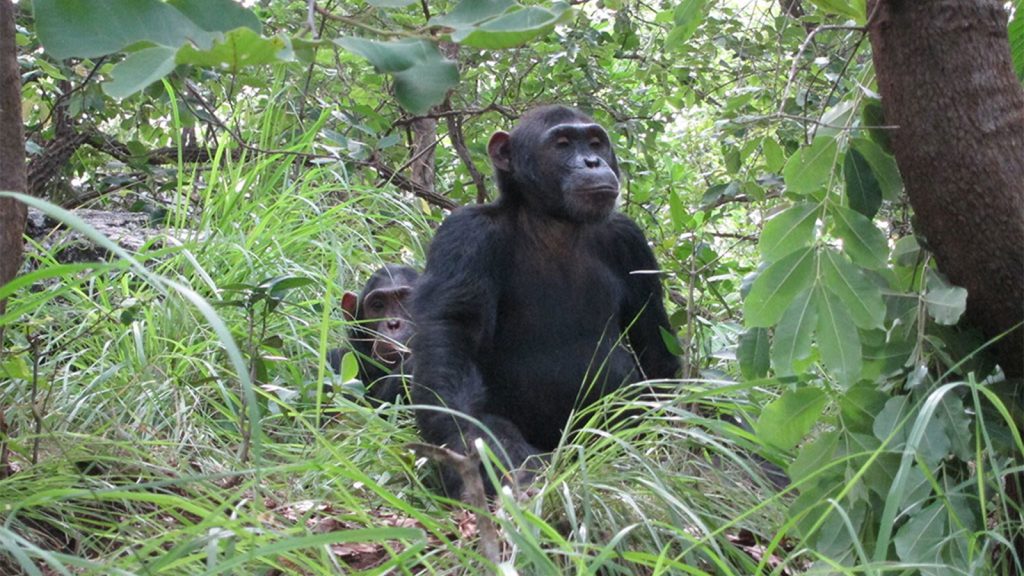
Chimpanzee trekking is the main activity that is carried out in Gombe, and it involves tracking chimps following the guidance of the guides through trek routes in search of the chimps, once they are located, tourists get to spend at least an hour with the primates. The trek experience starts as early as 7:00 am with a briefing about the reminders of the rules and regulations to follow by the guides. After the briefing, trekkers will be separated into groups of 6, and thereafter, the trekking will start. Tracking chimpanzees in Gombe can go on for hours, depending on the location of the chimpanzees, and after locating them, each group spends an hour with the primates. During your chimpanzee trekking, you will also be able to spot other primate species, which include red-tailed monkeys, blue monkeys and vervet monkeys, among others.
Gombe rules and regulations
Chimpanzees are primate species that need to be protected at all times and the following are the rules that trekkers have to follow before, during and when they are with the primates.
- The age limit for trekking is 15 years and above
- Littering in the national park has been prohibited
- Leave the national park the way you found it without causing any disturbance
- Follow all the instructions from the rangers and guides
- Leave a distance of 7 me between you and the chimpanzees
- Pay all the fees associated with the chimpanzees
- Feeding, smoking and touching the chimpanzees is not allowed
- Switch off your flash when taking photos of the chimpanzees
When to visit Gombe
The best time to visit Gombe National Park for chimpanzee tracking is during the dry season from late May to around October and December through January to February. Whereas chimpanzee trekking in Gombe can be carried out all year round, even during the wet/ rainy season, it is harder during the rainy season because of the mud and slippery routes from the rains received during this period.
Getting to Gombe: The best way to get to Gombe National Park is by using charter flights from Mwanza, Dar es Salaam and Arusha depending on your entry point to the Kigoma airport where you will then transfer to the Park on a ferry along Lake Tanganyika
Accommodation: There are several accommodation facilities that tourists can use when on a primate safari to Gombe National Park, and these range from budget to mid-range and luxury accommodation facilities. Some of the facilities in Gombe include Mukoyoyo Guest House, Mbali Mbali Gombe Lodge, Muzye Lodge and Gombe Forest Lodge among others. Talk to your tour operator about the best accommodation facilities to use considering your budget, and this needs to be done in advance.
Packing list for primate tracking in Tanzania
Packing for a primate safari to Tanzania is key to having the best safari because you get to track chimpanzees when you are comfortable and have everything that you need. The best packing list for primate safaris to Tanzania should include the following:
- Lightweight trousers that are in neutral colours. The length helps to keep your tree from scratches and bug bites.
- Neutral long-sleeved shirts at least two pairs in neutral colors
- Knee-length waterproof hike boots
- Insect repellent
- Sunscreen
- Warm sweater
- Waterproof jacket
- Socks
- Waterproof back bag
- Bottled drinking water and snacks
- A camera
- Binoculars
The cost of primate trekking in Tanzania
The cost of primate trekking in Tanzania is affected by several factors including the cost of the permit, the number of days spent on the safari, accommodation chosen (budget, mid-range and luxury), the season of travel (the dry season which is also the peak season and the rainy season which is also the low season), other safari activities planned on the itinerary and many more others. The cost of the permit in Tanzania differs depending on the safari destination chosen.
To be able to visit the two chimpanzee trekking destinations in Tanzania, tourists have to purchase chimpanzee trekking permits and the cost differs depending on the trekking destination. Trekking permits have to be purchased in advance because of the high demand during the dry season at least 3 to 6 months before the trek date.
Gombe National Park:
Adults children
Foreign non-residents USD 100 USD 20
Foreign residents USD 50 USD 10
East African citizens Tshs 10, 000 Tshs 2, 000
Children who are below the age of 5 years have free entrance to the national park; however, they will not be allowed to trek the chimpanzees.
Mahale National Park:
Foreign non-residents USD 150
Best time to go for primate safaris in Tanzania
Tanzania has two travel seasons, and these are the dry and wet seasons. Chimpanzees can be tracked in all the seasons. However, the best time is during the dry season, from June to October, because the chimpanzees are easier to see during the dry season, and the routes are better to use since they are dry and the bushes are not as thick as they are during the rainy season. There are skilled and experienced guides and trackers to help you easily spot the chimpanzees and although the rainy season is not the best, it is easier to see the chimpanzees because they gather around and do not move often due to the abundant food that is available during the rainy season.
For more information, please do not hesitate to contact us.



EARLY BIRD SAFARI DISCOUNTS FOR 2026-27
Take a budget gorilla trip into Uganda’s Bwindi Impenetrable Forest to trek mountain gorillas and stay in low-cost camps and gorilla lodges.
Responsible Travel Uganda
We care about the communities and environment we take our travellers to. Sustainable travel will keep us in business, so we have a responsible travel policy. Take a look!.
Latest Blog Stories
Related Travel News
Follow our community blog and keep up-to-date with travel news that will help you plan your safari trip
Safari Inquiries
Our Safari consultants are ready to answer all your questions. Kindly fill out the form below, and we will respond to you as soon as possible
CUSTOMER REVIEWS
Read the real stories and experiences shared by fellow travellers who've travelled with Encounter Africa Safaris.


These reviews provide authentic, firsthand insights, offering a true glimpse into what you can expect from the experience
Safari Inquiries
Our Safari consultants are ready to answer all your questions. Kindly fill out the form below, and we will respond to you as soon as possible