


How safe is chimpanzee trekking in Kibale forest now
October 24, 2024
How safe is chimpanzee trekking in Kibale forest now.
Chimpanzee trekking safari in Kibale Forest National Park is considered safe, with rigorous measures in place to protect both the visitors and the chimpanzees. The Uganda Wildlife Authority (UWA) and the experienced guides ensure that the trekkers maintain a safe distance from the chimps, typically 7 to 10 meters, to prevent disturbance and potential aggression. Pre-trek briefings emphasize responsible behavior, and the guides monitor the chimp’s behavior, adjusting the trekking route if necessary. Additionally, the trekkers are required to wear masks and maintain hygiene standards to minimize the risk of disease transmission.
Most Popular Safaris
8 day Uganda safari via Kigali
5 days gorillas and chimp safari
16 day primate game and culture
11 days gorilla tracking safari
5 days gorilla and Nile river source
17 day Uganda birding and wildlife
With a high ratio of guides to trekkers, the park ensures personalized attention and immediate response to any situation. Over 60 years of habituation has also made Kibale’s chimpanzees relatively accustomed to the human presence, reducing the likelihood of aggressive encounters. While risks can never be eliminated, Kibale’s excellent safety record and stringent protocols make chimpanzee trekking a thrilling yet secure safari experience.
Safety during the chimpanzee trekking safari is crucial due to the potential risks posed to both the chimpanzees and the human beings. Chimpanzees despite their intelligence and familiarity, are wild animals with unpredictable behavior, and close proximity can trigger aggression, especially when feeling threatened or protective of their young ones. Diseases such as Ebola, tuberculosis, and respiratory infections can also be transmitted between chimpanzees and humans, emphasizing the need for strict hygiene protocols.
Moreover, the chimpanzees’ powerful physical strength and agility can inflict serious injuries if they attack. Ensuring safety during chimpanzee trekking safari protects not only the visitors but also the chimpanzees themselves, as habituation to the humans can make them vulnerable to poaching and diseases. By maintaining a safe distance, adhering to the guidelines, and following expert guide’s instructions, the trekkers minimize the risk of accidents, ensuring a memorable and responsible safari experience while conserving these endangered primates and their habitats.
The safety measures for chimpanzee trekking safari in Kibale Forest National Park are set and enforced by a collaborative effort between the Uganda Wildlife Authority (UWA) the Uganda Tourism Board (UTB) and international conservation organizations, such as the International Union for Conservation of Nature (IUCN) and among others. Specifically, UWA’s experienced guides, park rangers and conservationists work together to establish and implement stringent guidelines, protocols and regulations to ensure the well-being of both the visitors and the chimpanzees. Additionally, the park’s management team, comprising of wildlife experts, ecologists, and veterinarians, continually monitors and updates safety protocols to reflect best practices in primate tourism, adhering to global standards and recommendations from organizations like the World Health Organization (WHO) and the International Gorilla Conservation Programme (IGCP|).
Chimpanzees in Kibale forest national park.
Kibale Forest National Park is home to a thriving population of approximately 1500 chimpanzees, making it one of the largest and most diverse chimpanzee communities in Africa. The park’s lush tropical rainforest provides an ideal habitat for these intelligent primates, with abundant food, shelter and social interaction. The chimpanzees in Kibale Forest National Park are habituated, allowing visitors to observe their fascinating behavior, including tool use, hunting, grooming, and social interactions. The park’s chimpanzee population is comprised of distinct communities, each with its unique characteristics and dynamics. Led by the dominant males, these communities roam the forest, foraging for fruits, leaves and insects, and nesting in intricate tree structures. With over 20 years of research and conservation efforts, Kibale’s chimpanzees have become a popular attraction, offering visitors the best opportunity to witness the wonderful intelligence of our closest living relatives in their natural habitat.
The chimpanzees in Kibale Forest National Park possess unique genetic characteristics with the DNA studies revealing a high degree of diversity and admixture. Research has shown that Kibale’s chimpanzees have a genetic makeup that is distinct from other East African chimpanzee populations, with a mix of central and eastern African genetic influences. The DNA diversity is comparable to that of western African chimpanzees, indicating ancient gene flow and migration events. Studies have also identified specific genetic adaptations such as immunity to simian immunodeficiency virus (SIV), which is similar to HIV in humans. Furthermore, genetic analysis has revealed that Kibale’s chimpanzees have a close genetic relationship with the humans, sharing approximately 98.8% of their DN with the humans, underscoring their status as our closest living relatives. This genetic richness makes Kibale’s chimpanzee population an important focus for conservation and scientific research.
Kibale Forest National Park.
Kibale Forest National Park, is located in western Uganda, is a lush tropical rainforest renowned for its incredible biodiversity and the primates. Spanning 795 square kilometers, the park is home to over 1500 chimpanzees, as well as over 13 other primate species, including the rare red colobus monkeys, L’Hoest’s monkeys, and grey-checked mangabeys and among many others. The forest’s varied habitats support an astonishing over 370 bird species like hornbills, turacos, parrots sunbirds and others, the park is home to reptiles and amphibians including snakes, lizards, frogs and among others, 250 tree species and over 70 mammal species including the elephants, leopards, bush pigs and among others. Kibale ancient forest, with some trees, are over 200 years old, provides a dramatic backdrop for guided nature walks, chimpanzee trekking safaris, chimpanzee habituation, and birdwatching excursions. The park’s expert guides and researchers offer insights into the forest’s complex ecosystem, making Kibale a premier safari destination for eco-tourists, scientists and adventurers. Kibale Forest National Park was designated as a national park in 1993. The park is located near other protected areas, such as Queen Elizabeth National Park and Rwenzori Mountains National Park thus creating a vast conservation corridor.
Chimpanzee trekking experience in Kibale Forest National Park.
Chimpanzee trekking safari in Kibale Forest National Park starts early in the morning at the park headquarters at Kanyanchu Visitor Centre, where the trekkers are given the rules, regulations and expectations during the chimpanzee trekking by the park guides, and park rangers. Chimpanzee trekking offers tourists the unforgettable safari experience, that is allowing visitors to encounter humanity’s closest living relatives in their natural habitat. After the briefing the tourists explore the park’s forest after being grouped into various groups of 6 people per group each group led by the expert rangers and track and winding trails. The trekkers embark on a thrilling adventure through the lush tropical forest, navigating dense foliage and the winding trails, chimpanzee trekking in Kibale Forest National Park takes a period of thirty minutes to 5 hours. As the tourists search for the chimpanzees, the sounds of the forest come alive, bird calls, rustling leaves, and the distant pant-hooting of the chimps. Upon locating the chimpanzees, the trekkers are given the period of one hour to be in the presence of the chimpanzees as they observe these intelligent creatures up close, witnessing their social interactions, playful antics, and intriguing behavior. The one hour visitors are immersed in the chimp’s world, watching as they feed, taking chimpanzees' pictures and recording the videos by using the cameras with less flash, groom and interacting with each other. The experience is both exhilarating and humbling, offering a profound appreciation for these wonderful creatures and the importance of conservation efforts protecting them. With over 1500 chimps habituated in Kibale, the likelihood of encounters is high, making this park a premier safari destination for the perfect chimpanzee trekking safari.
Park regulations and guidelines to follow chimpanzee trekking in Kibale Forest National Park for safety.
During the chimpanzee trekking safari in Kibale Forest National Park, strict guidelines and regulations ensure safety for both the visitors and the chimpanzees. Visitors must follow experienced guides and stay in groups, maintaining a minimum distance of 7 to 10 meters from the chimps to prevent disturbance and potential aggression. To minimize disease transmission, trekkers wear masks and maintain hygiene standards, washing hands before and after chimpanzee trekking. No eating or drinking is allowed near the chimpanzees, and flash photography is prohibited to avoid starling them.
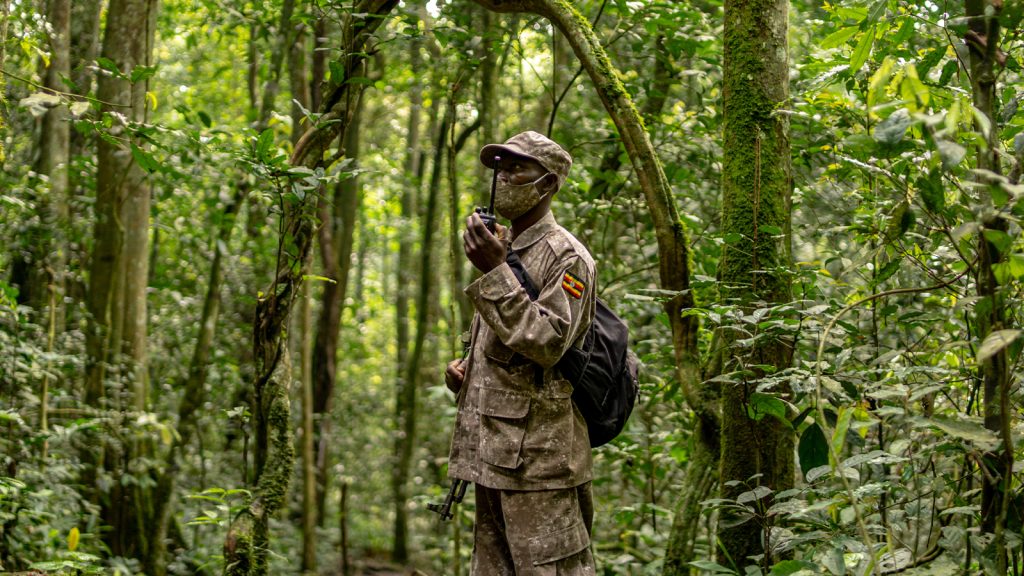
Trekkers must remain calm and composed, avoiding sudden movements or loud noises. Children under 12 years and individuals with contagious illnesses are not permitted. Additionally, trekking hours are limited to 6 am to 7 am and 2 pm to 4 pm to avoid disrupting chimp’s daily routines. Guides monitor the chimp’s behavior, adjusting trekking routes if necessary. Only pre-registered and authorized trekkers are allowed, with a maximum of 6 to 8 visitors per group. These regulations, enforced by Uganda Wildlife Authority rangers, prioritize safety, responsible tourism, and conservation of Kibale’s precious chimpanzee population.
Best time to do chimpanzee trekking in Kibale Forest National Park.
The best time for a chimpanzee trekking safari in Kibale Forest National Park is during the dry seasons from December to February and June to September, when the forest trails are more accessible and the chimps are easier to spot. During this period, the dry weather minimizes the risk of slippery paths and muddy conditions, making trekking safer and more enjoyable. Additionally, the chimpanzees tend to stay closer to the forest floor, increasing visibility and allowing for better photography opportunities. The morning hours between 6 am and 8 am, offer the best viewing experiences as the chimps are most active during this time. However, for those interested in witnessing the chimp’s nesting behavior, the afternoon hours between 2 pm and 4 pm are real. On the other side, you are reminded to avoid the wet or rainy season during the chimpanzee trekking in the months of March to May and October to November as the wet conditions can make trekking challenging and reduce chimpanzee sightings. Overall planning your trek during the dry season ensures a rewarding and memorable experience in Kibale Forest National Park.
Chimpanzee trekking in the rainy season or wet season in Kibale Forest National Park however offers some advantages despite the challenging terrain, during the rainy season there can be fewer tourists which results in lower prices and more intimate, peaceful experience, as the chimpanzees tend to stay closer to the forest trails, increasing the likelihood of encounters, again that’s the period when the accommodation facilities close or within the park areas can be friendly thus enabling tourists on a budget basis to do a perfect chimpanzee trekking.
Chimpanzee trekking permit in Kibale Forest National Park.
The chimpanzee trekking permit in Kibale Forest National Park is a mandatory document required for visitors seeking to participate in this exhilarating experience. Issued by the Uganda Wildlife Authority (UWA) the permits allow the trekkers to track and observe chimpanzees in their natural habitat, with proceeds supporting conservation efforts and community development projects. The permit costs 250 USD per person per trek for non-foreign residents, 200 USD per person per trek for foreign residents, and 150,000 UGX per person per trek for East African citizens. Permits can booked in advance through Uganda Wildlife Authority or a reputable tour company like Encounter Africa Safaris with a minimum of 2 to 3 months’ notice recommended, especially during peak season (June to September and December to February). Each permit is valid for one hour of chimpanzee viewing, and the trekkers must be at least 12 year old and physically fit to participate. The permit also includes guided trekking services, park entrance fees and contributions to the local communities, ensuring a responsible and enriching safari experience for the visitors while supporting the protection of Kibale’s precious chimpanzee populations.
Where to stay during chimpanzee trekking safari in Kibale Forest National Park.
During a chimpanzee trekking safari in Kibale Forest National Park, visitors have a range of accommodation options to suit various budgets and preferences, these accommodations range from budgets, mid-range and luxury. Some of the accommodations includes Ndali Lodge, Kyaninga Lodge, Crater Lake Lodge, Kibale Forest Lodge, Chimpanzee Forest Guesthouse, Chimpundu Lodge, Isunga Lodge, Kanyanchu River Camp, Nkuruba Community Lodge and many others. Strategically located near the park’s entrance or within walking distance to the Kanyanchu Visitor Centre, these accommodations cater to diverse needs allowing the trekkers to focus on their chimpanzee adventure while enjoying the beauty of Kibale’s surroundings.
Contact us for more information.



EARLY BIRD SAFARI DISCOUNTS FOR 2026-27
Take a budget gorilla trip into Uganda’s Bwindi Impenetrable Forest to trek mountain gorillas and stay in low-cost camps and gorilla lodges.
Responsible Travel Uganda
We care about the communities and environment we take our travellers to. Sustainable travel will keep us in business, so we have a responsible travel policy. Take a look!.
Latest Blog Stories
Related Travel News
Follow our community blog and keep up-to-date with travel news that will help you plan your safari trip
Safari Inquiries
Our Safari consultants are ready to answer all your questions. Kindly fill out the form below, and we will respond to you as soon as possible
CUSTOMER REVIEWS
Read the real stories and experiences shared by fellow travellers who've travelled with Encounter Africa Safaris.


These reviews provide authentic, firsthand insights, offering a true glimpse into what you can expect from the experience
Safari Inquiries
Our Safari consultants are ready to answer all your questions. Kindly fill out the form below, and we will respond to you as soon as possible